Commercial Glass Door Repair in Buffalo NY
Commercial glass doors on Buffalo storefronts take daily punishment from wind off Lake Erie, heavy foot traffic, winter salt, and sudden temperature swings. When a tempered glass panel shatters, when a door jams from a bent rail, or when a closer leaks oil and the door will not latch, it disrupts sales and creates a security gap. A credible repair partner needs to diagnose glass, hardware, and frame issues together, not in isolation. In Buffalo and Western New York, that means long experience with aluminum storefront systems, the right glass on the truck, and field judgment that reflects local weather and building stock.
Why commercial glass door repair in Buffalo is different
Buffalo sits in ASHRAE Climate Zone 5A with severe winters and frequent lake-effect storms. Annual snowfall reaches 95 to 100+ inches, often delivered in bursts over 48 hours. Temperatures drop below 20°F, which is the point at which hydraulic door closer fluid thickens and loses damping consistency. That thick fluid stresses internal seals and causes leaks, which is a common prelude to a glass break because a slamming door sends shock through the stile and rail frame. Wind gusts along the waterfront and across corridors like Main Street, Elmwood Avenue, Hertel Avenue, and Niagara Falls Boulevard push doors off alignment. Road salt tracked into pivot pockets corrodes bottom bearings. These are Buffalo-specific patterns, and they shape every repair decision.
Many storefronts across downtown Buffalo, Allentown, Elmwood Village, the Delaware District, and Larkinville were retrofitted with aluminum storefronts decades ago. The frames remain serviceable, but glass lites and hardware have reached end of life. In Cheektowaga, Amherst, Tonawanda, West Seneca, Hamburg, and Orchard Park, mid-century strip plazas with Kawneer, Vistawall, US Aluminum, Tubelite, or YKK AP systems see the same cycle of closer failure, pivot wear, and stress cracks at corners. Knowing which part fails first, and why it failed, is the difference between a repair that lasts and a repeat call two months later.
What “commercial glass door repair” covers on a Buffalo storefront
A commercial glass door is an aluminum stile and rail door that holds a safety glass panel. “Safety glass” means tempered or laminated glass tested to break safely, marked per ANSI Z97.1. The door pivots on a pivot hinge, which is hardware that rotates the door on pins at the top and bottom rather than on side-mounted butt hinges. The door closes with a hydraulic door closer, which is a spring-and-fluid device that controls closing speed so the door does not slam. A typical storefront also uses an Adams Rite lock, which is a narrow stile lock family built for aluminum doors, and a threshold, which is the metal plate under the door that seals the floor and keeps out water.
Repair work may involve replacing shattered tempered glass that meets ASTM C1048, swapping to laminated safety glass that meets ASTM C1172 for added security, or fabricating an insulated glass unit that meets ASTM E2190 when the door contains a double-pane lite. It often includes adjusting or replacing the closer, re-centering the door in the frame, replacing the offset pivot hinge set, and aligning the strike so the latch engages without rubbing. The goal is to restore clear sightlines, smooth swing, and secure latching in one visit.
Glass specifications that matter in Western New York
Most storefront doors in Buffalo use 1/4 inch tempered glass, which is heat-treated glass that breaks into small granules instead of sharp shards. Tempered panels are fast to source in common sizes and are ideal when code or usage does not require burglary resistance. Laminated safety glass is two layers of glass bonded with an interlayer, which holds the glass together when broken. Laminated is often chosen for restaurants and retail on Elmwood Avenue and Hertel Avenue to slow a smash-and-grab attempt. It meets ASTM C1172 and carries an ANSI Z97.1 safety stamp. Insulated glass units, often 1 inch thick with a 5/8 inch air space, improve energy performance on entries exposed to wind at sites like Niagara River and Lake Erie frontage, Main Street Amherst, and Transit Road plazas. Low-E coatings and argon gas fills are available, and the right choice depends on door weight limits and closer capacity.
Where fire-rated glass is present in adjacent assemblies, the door glass still needs to be safety glazing. Legacy wire glass used in some older buildings near Broadway-Fillmore or Seneca-Babcock does not pass modern safety standards when used in a swinging door and is often replaced during a repair project. For medical and professional buildings in the Buffalo Niagara Medical Campus at 14203, automatic door entries require AAADM principles even when the service ticket is for the glass lite. Sightline and sensor operation must remain clear and within ANSI A156.10 or A156.19 standards after any repair.
Hardware and frame issues that drive many glass failures
Glass rarely fails alone. A leaking closer, a sagging pivot, or a racked frame often sets the stage. A hydraulic door closer, which controls speed and latching, will leak when its internal seals wear. Oil on the threshold or on the inside top rail is a clear sign. In Buffalo winters, this is frequent below 20°F when fluid thickens. If the closer loses backcheck, which is the internal resistance that slows the door near full open, a wind gust can slam the door into the stop and crack the glass at the corner. A surface-mounted closer like an LCN 4040 or Norton 8000 series is easy to replace. A concealed overhead closer like a Dorma RTS88 or a floor-mounted Rixson unit needs more time and parts but keeps sightlines clean.
Offset pivot hinges take vertical load at the bottom pivot bearing. The bottom pivot sits in a floor shoe or threshold pocket where salt and moisture collect. Over years, bearings corrode, the door sags, and the bottom rail drags on the threshold. That drag twists the stile and can stress the glass. Common replacement parts in Buffalo include the Kawneer TH1118 offset pivot set and the 050331 intermediate pivot on doors taller than 7 feet 6 inches. The intermediate pivot, which supports the door mid-height, reduces stress on the bottom bearing. When a door sags, a skilled technician checks top pivot adjustment, bottom bearing wear, and frame plumb before any glass goes in. Skipping that step cracks the new glass.
Locks and exit hardware also matter. An Adams Rite MS1850 deadbolt, which throws a solid steel bolt into the frame, is common on single doors that need after-hours security. A narrow stile deadlatch, which self latches on shutdown, allows re-entry with a key or paddle. Panic hardware such as a Von Duprin 98 or 99 Series rim exit device is typical on egress doors. If the latch or strike misaligns because the frame shifted from a vehicle impact or freeze-thaw cycle, the door bounces off the strike. That bounce shocks the glass. Repair means re-square the frame, shim the strike, and set closer latch speed so the latch engages without slam.
Typical Buffalo failure scenarios and how they get resolved
Break-ins on corridors like Allen Street, Grant Street, and Chippewa Street often result in a shattered tempered panel and a bent bottom rail. First, the opening gets secured with a board-up. Board-up means cutting 1/2 inch plywood or 7/16 inch OSB to fit, anchoring to the frame, and installing temporary hardware if the lock is compromised. Then a new glass panel is fabricated, edges are dressed to fit the aluminum glazing pocket, and the panel is set with tape or gasket. If the bottom rail is bent, the technician replaces the rail or the door leaf and transfers hardware. At the same time, the closer is checked and replaced if backcheck is weak to prevent a repeat incident.
Winter storm damage appears as thermal stress cracks on insulated glass doors and wind-stripped closers. A crack that starts at a corner and runs diagonally likely indicates a point load or frame torsion. In that case, the technician checks threshold level, shims as needed, and adjusts the top pivot. For high-wind sites like Canalside or Delaware Avenue near the I-190 corridor, upgrading to a heavy-duty closer like an LCN 4110 or adding an exterior storm door can reduce wind load on the primary entry.
High cycle count locations such as quick-service restaurants on Walden Avenue or Transit Road see 500 to 3,000+ door cycles per day. That cycle count accelerates pivot and closer wear. A small drag today turns into a door that will not close next month. Repair that costs a few hundred dollars when done proactively can become a late-night call with security risk. In Buffalo, replacing a worn offset pivot set proactively can run roughly $150 to $450 in parts per door leaf, plus labor during regular hours. Waiting until after hours can add 50 to 100 percent in emergency premiums and may require temporary board-up if the door fails open. This cost pattern is consistent across Erie County from 14202 Downtown to 14075 Hamburg.
Brands and storefront systems common in Buffalo facilities
Aluminum storefront frames across Buffalo include Kawneer Trifab 350, 400, 450, and 500 series; Tubelite T14000 and T24000 series; YKK AP YES 45 XT and YES 60 XT; and legacy Vistawall and US Aluminum systems. Doors vary by stile width. Narrow stile is about 2-1/8 inches and is common on retail and restaurant entries where a sleek sightline is desired. Medium stile is about 3-1/2 inches, and wide stile is about 5 inches for heavier hardware like mortise locks. The system controls which pivot plates, glazing stops, and weatherstripping profiles fit correctly. Factory familiarity speeds repairs because the technician identifies the system on arrival, selects the correct pivot set or closer arm, and avoids re-work.
Closer and hardware brands seen daily include LCN 4040 and 4110 series, Norton 1600 and 8000 series, Dorma RTS88, Sargent 281 and 351 series, Adams Rite MS1850 deadbolts and 4510 paddle sets, and Von Duprin 98/99 exit devices. Electric strikes such as HES 1006 and Folger Adam 712 appear on controlled entries for banks and medical offices. Each brand has telltale markings and dimensions. Correct identification prevents mixing hardware that binds or leaks. On automatic doors in the Buffalo Niagara Medical Campus and larger retail, AAADM-certified service covers Stanley, Besam ASSA ABLOY, Horton, and Record USA operators. Even when the ticket is for broken glass, the operator and sensors must be checked against ANSI A156.10 or A156.19, and ADA opening force and closing speed must be verified.
Glass door energy and comfort factors in a cold climate
Energy loss at the entry is a real cost during Buffalo winters. Insulated glass units reduce condensation and drafts, and weatherstripping makes a bigger difference than many expect. Weatherstripping is the pliable gasket that seals the gap between the door and frame. An EPDM bulb gasket, which is a flexible rubber tube that compresses as the door closes, seals well in cold weather without sticking. Door sweeps at the bottom close the floor gap. A worn sweep in South Buffalo or North Park can feel like a space heater left on near the threshold. Upgrading to a low-E insulated lite on wind-exposed entries along the Niagara River, combined with new weatherstripping and a tuned closer, can trim heating loads and stop ice buildup at the threshold.
Thresholds corrode faster in Buffalo because of salt. Aluminum thresholds pit and lose their seal. Replacement is simple and often combined with pivot work. A continuous aluminum threshold with a thermal break, which is a plastic separator inside the metal that interrupts heat flow, reduces ice formation and improves comfort for guests stepping in from the cold.
Response model that fits Buffalo storefront emergencies
Commercial glass door emergencies do not align with business hours. A credible local company runs 24/7 and dispatches directly from Buffalo. A direct-dispatch model means the person answering knows storefront hardware and can commit to a window. For properties in 14204 near Sycamore Street, after-hours response averages within the hour. For outer suburbs such as Cheektowaga 14225, Amherst 14228 and 14226, Tonawanda 14150, West Seneca 14224, Hamburg 14075, and Orchard Park 14127, response commonly hits within two hours, weather permitting. Trucks must carry plywood and OSB for board-up, tempered glass blanks in common sizes, laminated safety glass options, glazing tape, wet glaze sealant, pivots, and closers. That inventory turns most calls into single-visit resolutions.
This stocked-truck approach avoids the two-trip model common with general glaziers who measure first and return later. In Buffalo, where wind and cold amplify risk at a broken opening, shaving a full day off the repair cycle matters. Doors that close and latch before midnight prevent theft and weather damage. For glass sizes that are not standard, board-up plus next-day glass is a proven workflow, and it is the pattern most retail managers on Elmwood Village and Main Street Amherst expect.
Cost ranges and what drives them in the Buffalo market
Costs vary with glass type, door brand, and hardware condition. Single tempered door lites typically fall into the mid hundreds for standard sizes and can rise for tall or shaped panels. Laminated glass costs more but adds security by holding together after impact. Insulated door lites increase cost further due to dual panes, spacers, and coatings. Labor rates rise after hours, during severe weather, or when board-up is required. Hardware adds scope. A surface closer swap is faster and cheaper than a concealed closer replacement. A bent bottom rail on a Kawneer 190 narrow stile door may require a new rail and re-glazing. A misaligned frame can add time for shimming and resetting anchors. In Western New York, proactive replacement of worn pivots and closers during regular hours is the cheapest path to avoid glass and security emergencies.
Facility managers in Williamsville 14221, Clarence, Depew, and Lancaster often bundle small repairs across multiple doors and properties. Bundling saves trips and spreads mobilization costs. The fall pre-winter visit is the highest-return service window in Buffalo. That visit catches closer leaks, weak backcheck, worn sweeps, loose thresholds, and pivot play before the first snap of cold. Given the way closer fluid behaves below 20°F and the strong winds off Lake Erie, catching these issues early produces real savings in both repair dollars and lost business hours.
Safety and compliance on every glass door repair
All replacement glass must carry the correct safety glazing mark under ANSI Z97.1. Doors on required egress paths must comply with NFPA 101 and IBC Chapter 10 for egress, which affects hardware selection. On automatic entries, AAADM practices apply for inspection and reset after glass replacement. ADA limits door opening force to about 5 pounds on interior doors and requires controlled closing speeds. A well-tuned LCN, Norton, Dorma, or Sargent closer meets these requirements when set correctly. Panic hardware on assembly occupancies must release without special knowledge or effort. On Buffalo jobs near schools, medical offices, and arenas like KeyBank Center and Highmark Stadium, these points are checked before the technician leaves the site.
Examples across Buffalo building types
Historic Main Street retail with older brick walls and non-plumb frames often need shimmed thresholds and adjusted pivots before glass will seat without bite. The aluminum storefront that went into a 1920s building near the Theatre District may be slightly twisted. A quick glass swap will break again. Correcting frame twist first is the fix.
Mid-century strip plazas in West Seneca and Cheektowaga often have original Vistawall or US Aluminum doors paired with later replacement closers. Mixed-brand setups can bind at full close and telegraph stress to the glass. Matching the closer arm geometry to the door and frame solves this, which is why brand familiarity matters.
Restaurant entries in Orchard Park and Hamburg see heavy usage and grease-laden air that attracts dust to closer arms and pivots. Cleaning and lubrication reduce wear, but worn bottom bearings still need replacement. Installing an intermediate pivot on tall doors spreads the load and extends life.
Medical and professional buildings in the 14203 Medical Corridor often combine automatic swing operators with full-lite laminated glass for quiet lobbies. Replacing a broken lite must include an AAADM-informed reset, sensor check, and verification to ANSI A156.19 before returning the opening to service.
Materials and inventory that speed Buffalo repairs
For single-trip results, service trucks carry common tempered door glass sizes, laminated blanks for field cut and edge-dress, and insulated unit components for quick order on standard sizes. Hardware stock includes Kawneer TH1118 offset pivot sets, 050331 intermediate pivots, Adams Rite MS1850 deadbolts and narrow stile deadlatches, LCN 4040 and 4110 closer bodies with arms, Norton 1600 and 8000 series closers, Dorma RTS88 spindles and covers, Sargent 281 and 351 closers, Von Duprin 98/99 exit device parts, EPDM bulb gasket weatherstripping, door sweeps, and aluminum thresholds. Carrying board-up materials is non-negotiable in Buffalo winters. Plywood or OSB secured to the frame, not to the masonry, protects the storefront until glass can be placed, even during a blizzard event along Route 33 or the I-90 Thruway corridor.
Why a repair-first strategy fits Buffalo budgets
Replacing an entire door or frame is sometimes necessary after a vehicle impact or severe frame twist. Most of the time, the frame can remain. Aluminum storefront systems are modular. Pivot sets, closers, weatherstripping, thresholds, and glass are replaceable. Keeping the frame in place avoids masonry exposure during winter and keeps business open. The repair-first approach aligns with Buffalo’s older building stock and variable weather windows. It also respects the reality that material costs for specialty glass and heavy-duty hardware have risen in recent years. Directing budget to the components that fail, and doing so during regular hours instead of after-hours emergencies, is the simplest way to control the total cost of ownership on retail corridors from Kenmore and 14217 to North Tonawanda 14120.
Measurable, shareable local insight for Buffalo facility teams
Across Western New York storefronts, three facts shape maintenance planning. First, hydraulic closer fluid thickens below 20°F. Buffalo winter nights dip below that line often. Closer seals then fail, and doors slam, which is why fall pre-winter closer checks are the single highest-return visit on the Buffalo door calendar. Second, high-traffic entries in retail corridors cycle 500 to 3,000+ times per day. That is double or triple the rate in calmer suburban markets in other states, which accelerates pivot and closer wear. Third, bottom pivot bearings fail faster in Buffalo because road salt washes into the floor pocket. Replacing a pivot proactively at $150 to $450 per set in regular hours beats an after-hours call with a 50 to 100 percent premium, potential board-up, and lost sales while waiting on glass. Property managers who socialize these numbers with tenants see fewer emergencies and lower shared costs.
Service coverage across Buffalo and Western New York
Commercial glass door repair coverage spans the City of Buffalo, including Downtown 14202, Allentown and Elmwood Village 14222, the Medical Corridor 14203, 14204 in the Sycamore shopfront door repair Buffalo NY Street and Broadway-Fillmore area, 14206 Broadway-Fillmore east, 14213 West Side, 14215 University District, 14220 South Buffalo, and 14216 North Park. Erie County suburbs include Cheektowaga 14225 and 14227, West Seneca 14224, Hamburg 14075, Orchard Park 14127, Lackawanna 14218 and 14219, Kenmore 14217, Tonawanda 14150, Amherst 14226 and 14228, Williamsville 14221, Clarence and Clarence Center 14031, Lancaster 14086, Depew 14043, and East Aurora 14052. Niagara County coverage reaches Niagara Falls, Lockport 14094, North Tonawanda 14120, Lewiston, and Youngstown. This footprint matters because a service call in 14202 during a Lake Erie wind advisory looks different from a sunny day call in Clarence. Trucks and training reflect that reality.
Why local storefront brand expertise matters
Buffalo buildings reveal patterns by brand and era. A Kawneer 190 narrow stile door with a TH1118 pivot feels and adjusts differently than a Tubelite door with a different arm geometry. A YKK AP YES 45 XT frame has alternate glazing beads. Identifying the brand and series informs which glass setting blocks, gaskets, and sealants provide a durable seat for the new panel. It also reveals which closer arms and spindle heights will align with the door’s centerline to avoid future binding. This brand fluency shortens downtime on sites along Sheridan Drive, Niagara Falls Boulevard, and Genesee Street where customer traffic is constant.
Board-up and return: the practical Buffalo workflow
Not every glass size is on the truck. When a custom lite is required, the secure path is board-up now and return with the correct glass as soon as it is ready. Board-up is more than plywood. It includes checking the frame for twist, setting temporary hardware if the lock failed, and verifying that adjacent sidelites are stable. The return visit should include prep of the glazing pocket, cleaning old tape and sealant, and setting the new lite with equal bite on all sides to avoid point loads. If the door leaf was bent during the break, swapping rails or the leaf before glazing prevents future cracks. For Buffalo’s winter and wind, this two-step process delivers security without rushing a poor fit.
Why businesses across Buffalo choose a commercial door specialist
Commercial glass work on an aluminum storefront door is not only glass. It is a system of glass, aluminum, pivots, closers, locks, and code. A specialist who works daily on Kawneer, Tubelite, YKK AP, Vistawall, and US Aluminum systems can diagnose the full opening. They carry LCN, Norton, Dorma, and Sargent closers. They know Adams Rite and Von Duprin hardware. They understand Buffalo weather and traffic patterns, and they plan board-up and return workflows that fit the city’s pace. This level of focus produces repairs that last and reduce emergency calls.
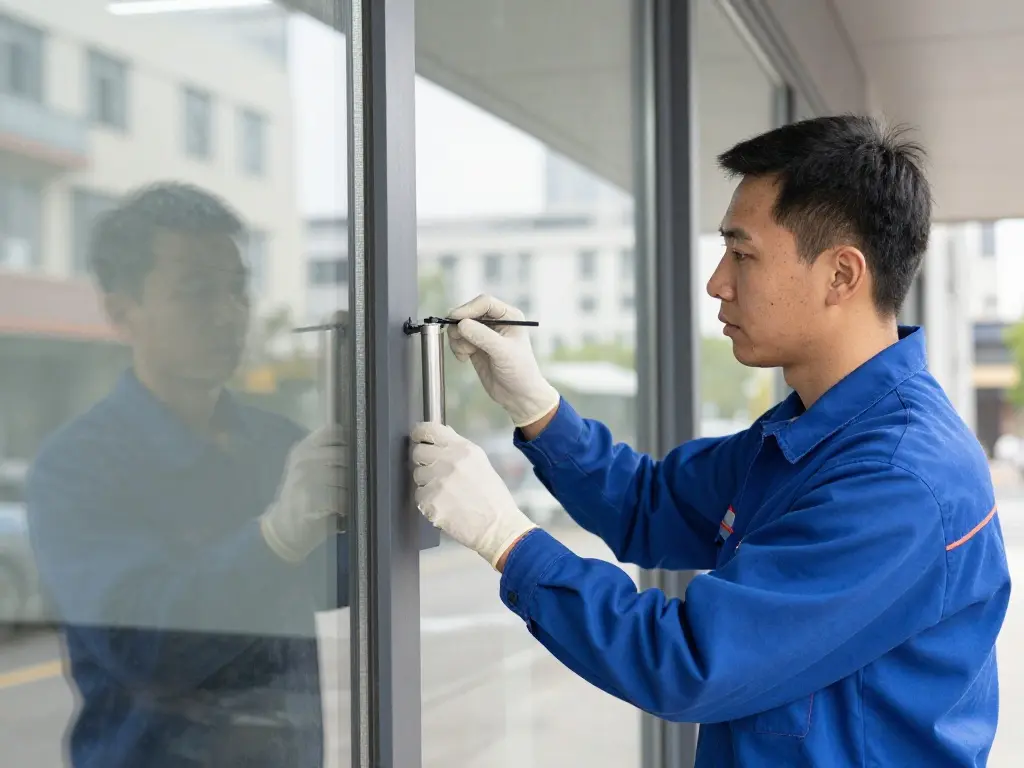
Why Buffalo businesses call A-24 Hour Door National Inc. For commercial glass door repair
A-24 Hour Door National Inc. Is a Buffalo-based commercial storefront and glass repair contractor located at 344 Sycamore Street, Buffalo, NY 14204. The company runs 24/7 emergency dispatch with direct-dispatch local technicians, not a call center. AAADM-certified technicians handle automatic door entries and verify ANSI A156.10 and A156.19 safety after glass work on powered doors. Service trucks are stocked for single-trip repair on common storefront failures with tempered glass blanks, laminated safety glass, glazing tape and gasket, Kawneer TH1118 and 050331 pivots, Adams Rite MS1850 storefront door repair Buffalo, NY deadbolts, LCN 4040 and Norton 8000 closers, Dorma RTS88 parts, Von Duprin 98/99 components, EPDM bulb gaskets, door sweeps, and aluminum thresholds. The team is factory-familiar with Kawneer, Tubelite, YKK AP, Vistawall, US Aluminum, and Ellison Bronze heavy-duty balanced doors.
Coverage includes Buffalo neighborhoods from Downtown 14202 and the 14203 Medical Corridor to Elmwood Village 14222, Broadway-Fillmore 14204, West Side 14213, South Buffalo 14220, and University District 14215, as well as Cheektowaga 14225, West Seneca 14224, Hamburg 14075, Orchard Park 14127, Lackawanna 14218, Kenmore 14217, Tonawanda 14150, Amherst 14226 and 14228, Williamsville 14221, Clarence, Lancaster 14086, Depew 14043, East Aurora 14052, and the broader Western New York corridor. Same-day response is standard on most emergency storefront glass and door calls in the Buffalo metro, with within-the-hour city response common after hours and within two hours for outer suburbs, weather permitting.
Facility managers, retail owners, and restaurant operators who need commercial glass door repair, emergency board-up, storefront door adjustment, pivot hinge replacement, door closer service, or storefront door repair Buffalo, NY can call +1-716-894-2000 for immediate dispatch or to schedule a diagnostic visit. Fully insured and bonded in New York State. Commercial glass specialty with tempered, laminated, and insulated glass replacement. Preventive maintenance programs built around Buffalo’s fall pre-winter service window are available for multi-door and multi-site portfolios.
A-24 Hour Door National Inc provides commercial and residential door repair in Buffalo, NY. Our technicians service and replace a wide range of entry systems, including automatic business doors, hollow metal frames, storefront entrances, fire-rated steel and wood doors, and both sectional and rolling steel garage doors. We’re available 24/7, including holidays, to deliver emergency repairs and keep your property secure. Our service trucks arrive fully stocked with hardware, tools, and replacement parts to minimize downtime and restore safe, reliable access. Whether you need a new door installed or fast repair to get your business back up and running, our team is ready to help.
A-24 Hour Door National Inc
344 Sycamore St
Buffalo,
NY
14204,
USA
Phone: (716) 894-2000
Website: https://a24hour.biz/buffalo
Instagram: @a24hourdoor
Facebook: 24 Hour Door
Yelp: A-24 Hour Door National (Buffalo)
X (Twitter): @a24hrdoor